
Every traveler knows the Great Pyramids of Giza. Yet, few realize that the architectural genius required to build them was perfected decades earlier just 30 kilometers south in the ancient necropolises of Saqqara and Dahshur. Here, in the golden desert silence far from the tourist buses, lies the true birthplace of pyramid engineering—and the spiritual namesake of our travel company: King Djoser (Zoser).
A private Saqqara and Dahshur Day Tour from Cairo offers what seasoned Egyptologists consider the single most authentic, unhurried, and fascinating archaeological day trip in northern Egypt. In a single day, you can stand before the world’s oldest monumental stone building, climb deep into the interior burial chamber of the Red Pyramid, and unravel the subterranean mystery of the Serapeum.
Here is your complete 2026 guide to exploring Saqqara, Dahshur, and the ancient capital of Memphis.
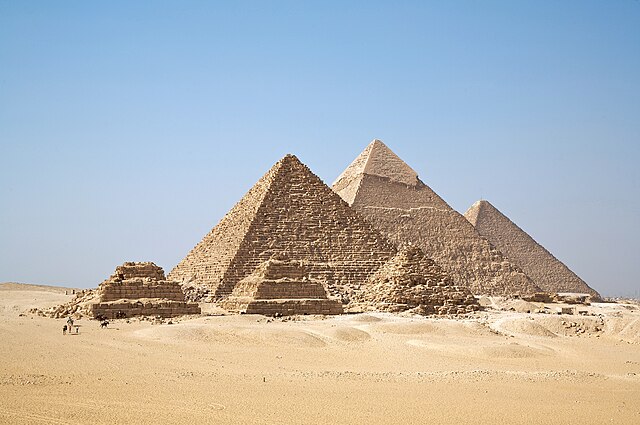
The Legend of King Djoser & The Step Pyramid of Saqqara
Around 2670 BC, during Egypt’s Third Dynasty, Pharaoh Djoser (Zoser) and his vizier-architect Imhotep revolutionized human construction forever. Prior to Djoser, pharaohs were buried in flat rectangular mudbrick tombs known as mastabas. Imhotep conceived a bold, unprecedented idea: stacking six progressively smaller stone mastabas atop one another to create a monumental 60-meter staircase reaching toward the heavens.
The result was the Step Pyramid of Djoser—the world’s very first colossal stone architecture. When you enter the vast funerary complex through the grand colonnade of fluted stone pillars, you are literally standing at the dawn of monumental human civilization.
Following a massive decade-long restoration completed recently by the Egyptian Ministry of Tourism and Antiquities, visitors can now walk the southern courtyard, admire the Cobra Wall (Uraeus frieze), and peer down the 28-meter central shaft directly into Djoser’s granite burial vault.
The Subterranean Riddle: The Serapeum of Saqqara
Just a short drive across the Saqqara plateau lies one of the most enigmatic archaeological discoveries on earth: the Serapeum. Discovered in 1850 by French archaeologist Auguste Mariette, the Serapeum is a vast underground labyrinth carved into the bedrock.
Inside the dimly lit subterranean vaults sit 24 colossal stone sarcophagi, each carved from single blocks of solid black granite, basalt, and diorite weighing up to 70 tons each. These enormous vaults served as the sacred burial tombs of the Apis Bulls—living incarnations of the god Ptah worshipped in nearby Memphis. The extreme precision of the stone polishing and subterranean engineering continues to astonish modern stonemasons and engineers.
Dahshur: Pharaoh Sneferu’s Pyramids of Trial and Perfection
Continuing south to Dahshur, the desert becomes even quieter and more dramatic. Dahshur is home to two monumental pyramids built by Pharaoh Sneferu (father of Khufu, the builder of Giza’s Great Pyramid):
1. The Bent Pyramid: Egypt’s Unique Architectural Masterpiece
Rising at a steep 54-degree angle before abruptly shifting to a gentler 43-degree incline halfway up, the Bent Pyramid represents the thrilling trial-and-error evolution of pyramid construction. Realizing the initial slope was causing structural stress cracks, ancient builders adjusted the angle mid-construction. Because of this unique profile, the Bent Pyramid still retains almost all of its original polished outer limestone casing, looking today much as it did 4,500 years ago.
2. The Red Pyramid: The World’s First True Pyramid
Having learned from the structural challenges of the Bent Pyramid, Sneferu built the Red Pyramid (named for the reddish hue of its weathered iron-rich limestone blocks). Rising at a steady 43 degrees, it was the first successfully completed smooth-sided, geometrically true pyramid in history.
Best of all, entering the Red Pyramid is typically included with your Dahshur site ticket. You climb a wooden staircase up the northern face, descend down a 60-meter inclined tunnel, and emerge into three towering corbelled ceiling vaults that echo with millennia of silence.
Memphis: Egypt’s First Imperial Capital & Mit Rahina
To understand the necropolises of Saqqara and Dahshur, one must visit the city they served: Memphis (Ineb-Hedj). Founded around 3100 BC by King Menes after uniting Upper and Lower Egypt, Memphis was the political and administrative powerhouse of the Old Kingdom.
Today, the open-air museum at Mit Rahina preserves astonishing treasures from the city’s golden age, including:
- The Colossus of Ramesses II: A breath-taking 10-meter limestone statue of Pharaoh Ramesses II lying prone inside a dedicated viewing gallery, displaying intricate carvings on the pharaoh’s belt, dagger, and chest cartouches.
- The Alabaster Sphinx: Weighing over 80 tons, this is the second-largest sphinx statue in Egypt, carved from a single block of translucent calcite alabaster.
Explore Saqqara & Dahshur with Zoser Travel Specialists
Step beyond the crowds of Giza and experience the cradle of pyramid architecture with our licensed Egyptologist guides and private executive transfers.
Practical Guide: Distance, Timing & What to Bring
- Distance & Timing: Saqqara is located about 30 km (45 minutes) south of Cairo/Giza, while Dahshur is another 15 minutes further south. A full-day tour typically spans 6 to 7 hours, allowing ample time for interior pyramid exploration.
- What to Wear: Entering the Bent or Red Pyramids involves walking down steep wooden ramps with low ceilings. Wear flexible, breathable clothing and closed-toe athletic or hiking shoes with good grip.
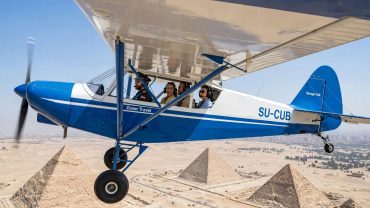
- Combine with an Aerial Flight: For the ultimate perspective on Egypt’s pyramid builders, pair this ground excursion with Zoser Travel’s newly launched Cairo & Giza 40-Minute Scenic Airplane Flight or a sunrise Pyramids Paramotor Flight.
Frequently Asked Questions
Why is Saqqara called the birthplace of pyramids?
Saqqara is home to the Step Pyramid of Djoser, constructed around 2670 BC. It was the world’s first large-scale stone masonry monument, marking the transition from simple mudbrick mastaba tombs to towering royal pyramids.
Can visitors go inside the pyramids at Dahshur?
Yes. Visitors can enter both the Red Pyramid and the Bent Pyramid. Entrance involves navigating steep inclined passages that lead into magnificent corbelled burial chambers.
Is Saqqara crowded compared to Giza?
No. Saqqara and Dahshur receive only a fraction of the visitor volume seen at the Giza Plateau, making them peaceful, quiet, and ideal for authentic photography and deep historical contemplation.


Comment (0)