
A comprehensive Islamic and Coptic Cairo tour is the single most rewarding cultural journey for travelers seeking to understand the living soul of Egypt. Beyond the ancient stone pyramids of the pharaohs, Cairo preserves over two thousand years of continuous religious co-existence, medieval Islamic empire, and sacred Christian sanctuary. From the Roman bastions of Babylon and the subterranean crypt where the Holy Family sheltered, to the towering Ottoman minarets of the Saladin Citadel and the vibrant sensory labyrinth of Khan el-Khalili, booking an Islamic and Coptic Cairo tour reveals an extraordinary UNESCO World Heritage treasure.
Cultural Snapshot: Islamic & Coptic Cairo at a Glance (2026)
- Tour Duration: Full Day (Approximately 6.5 to 7.5 Hours door-to-door)
- Key Cultural Sites: Saladin Citadel, Muhammad Ali Alabaster Mosque, The Hanging Church, Abu Serga Crypt, Ben Ezra Synagogue & Khan el-Khalili
- Expert Guidance: Certified private Egyptologist & Islamic/Coptic heritage historian
- Gourmet Dining: Authentic multi-course Egyptian fine dining lunch included
- Private Transfers: Air-conditioned executive minivan directly from your hotel lobby
- Dress Code: Modest attire covering shoulders and knees (complimentary mosque headscarves provided)
- Photography: Permitted across all open courtyards, citadel terraces, and historic bazaar alleys
📋 Table of Contents: Complete Islamic & Coptic Cairo Guide
- 1. The Living Heart of Egypt: Why an Islamic and Coptic Cairo Tour is Essential
- 2. The Medieval Citadel of Saladin & The Alabaster Mosque of Muhammad Ali
- 3. Coptic Cairo Sanctuaries Visited on an Islamic and Coptic Cairo Tour
- 4. Saints Sergius & Bacchus (Abu Serga): The Crypt of the Holy Family
- 5. The Ben Ezra Synagogue & The Priceless Cairo Genizah Discovery
- 6. Medieval Souqs Explored on an Islamic and Coptic Cairo Tour: Khan el-Khalili & El-Moez
- 7. Cultural Dress Codes, Mosque Etiquette & Respectful Visiting Advice
- 8. Master Day Itinerary for Your Private Islamic and Coptic Cairo Tour
- 9. Frequently Asked Questions (FAQ)
While thousands of tourists confine their Egyptian travels strictly to ancient necropolises and royal tombs, those who embark on a private Islamic and Coptic Cairo tour encounter an extraordinary human tapestry. Here, alongside medieval city gates dating back to the Fatimid dynasty, brass artisans still hammer ornate lanterns by hand, ancient Coptic hymns sung in the language of the pharaohs resonate within candlelit basilicas, and the aromatic scent of roasted coffee and cardamom drifts through historic market archways.
1. The Living Heart of Egypt: Why an Islamic and Coptic Cairo Tour is Essential
Cairo earned the historic title of “The City of a Thousand Minarets” because of its astonishing concentration of medieval Islamic monuments. An Cairo historic religious tour connects the dots between Egypt’s Greco-Roman twilight, the birth of early Christian monasticism, the arrival of Islam under Amr ibn al-Aas in 641 AD, and the grand military architectural achievements of the Ayyubid and Mamluk empires.
Accompanied by an expert Egyptologist from Zoser Travel, your Cairo historic religious tour is not simply a sightseeing walk; you will decipher the architectural evolution of pointed arches, intricate wood carving (Mashrabiya), marble mosaic inlay, and the sacred histories of faiths that have co-existed in this neighborhood for two millennia. An authentic Islamic and Coptic Cairo tour provides context that breathes life into Egypt’s cultural narrative.
2. The Medieval Citadel of Saladin & The Alabaster Mosque of Muhammad Ali
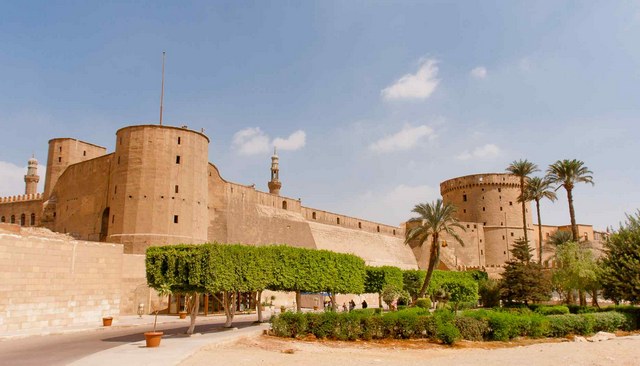
Dominating Cairo’s eastern skyline from its perch on the limestone cliffs of the Mokattam Hills, the Citadel of Saladin (Qalaat Salah El-Din) was founded in 1176 AD by the legendary Sultan Salah al-Din al-Ayyubi to fortify Cairo against Crusader incursions. For nearly seven centuries, until the mid-19th century, this fortified stone citadel remained the nerve center of Egyptian political and military power.
Crown jewel of the citadel complex visited during an Cairo historic religious tour is the breathtaking Mosque of Muhammad Ali Pasha, constructed between 1830 and 1848. Commissioned by the founder of modern Egypt in memory of his deceased son Tusun Pasha, the mosque is designed in the imperial Ottoman style modeled after the Blue Mosque of Istanbul. Its lower exterior walls and grand interior prayer hall are clad in lustrous yellow alabaster quarried from Beni Suef. Stepping onto the mosque’s elevated western terrace delivers the most celebrated panoramic lookout in Cairo—on clear days, extending across the entire river valley all the way to the Great Pyramids of Giza.
3. Coptic Cairo Sanctuaries Visited on an Islamic and Coptic Cairo Tour
Descending south into the serene pedestrian sanctuary of Coptic Cairo (Masr Al-Qadima), you enter an area that predates the founding of Cairo itself. Here, Roman Emperor Trajan established the massive stone fortress of Babylon in the 1st century AD to control navigation on the Nile.
Built directly on top of the southern Roman gatehouse towers stands the world-famous Hanging Church (Al-Muallaqa), formally known as the Saint Virgin Mary Coptic Orthodox Church. A highlight of every Cairo historic religious tour, this architectural wonder features a nave suspended above the open Roman gateway. Key marvels include:
- The Timber Barrel-Vaulted Ceiling: Crafted from dark cedar timber, the arched roof was intentionally designed by medieval Coptic master builders to resemble the inverted hull of Noah’s Ark.
- The 13th-Century Marble Pulpit: Supported by 13 slender marble columns representing Jesus Christ and the Twelve Apostles, with one column carved from dark basalt to symbolize Judas Iscariot.
- Ancient Inlaid Iconostasis: Intricately carved ebony wood screens inlaid with radiant ivory and mother-of-pearl, framing historic icons dating from the 8th to the 18th centuries.
4. Saints Sergius & Bacchus (Abu Serga): The Crypt of the Holy Family
A few steps down a cobblestone alleyway lies the ancient 4th-century church of Saints Sergius and Bacchus, known locally as Church of Abu Serga. This is one of the most revered Christian pilgrimage sanctuaries in the Middle East. Beneath the high altar lies a subterranean stone crypt where the Virgin Mary, Saint Joseph, and the infant Jesus Christ are recorded to have taken refuge during their biblical flight into Egypt to escape the persecution of King Herod. Visiting this sacred crypt is an unforgettable milestone of your Cairo historic religious tour.
5. The Ben Ezra Synagogue & The Priceless Cairo Genizah Discovery
Completing the multi-faith pilgrimage district on your Cairo historic religious tour is the historic Ben Ezra Synagogue. According to local folklore, the synagogue grounds mark the spot where the infant Moses was pulled from the reeds of the Nile by the Pharaoh’s daughter. In the late 19th century, scholars discovered the famed Cairo Genizah in the synagogue’s storage attic—an unprecedented treasure trove of over 400,000 medieval Jewish, Arabic, and Aramaic documents that revolutionized historians’ understanding of Mediterranean social and economic life between the 9th and 19th centuries.
Book Your Private Islamic and Coptic Cairo Tour
Immerse yourself in two millennia of spiritual heritage with a licensed private Egyptologist, all monument entrance tickets, gourmet lunch, and private luxury vehicle transfers.
6. Medieval Souqs Explored on an Old Cairo Heritage Excursion: Khan el-Khalili & El-Moez
Your afternoon on an Cairo historic religious tour reaches its crescendo at Khan el-Khalili, the legendary 14th-century bazaar established during the Mamluk Sultanate by Emir Djaharks el-Khalili. Wandering into its vaulted stone gateways, you enter a vibrant world of traditional craftsmanship:
- Artisan Alleys: Watch master coppersmiths hammer massive decorative brass trays, master jewelers shape 18-karat gold cartouches, perfumers blend bespoke essential oils (such as pure lotus, jasmine, and ambergris), and leather crafters sew camel-hide bags on your Islamic and Coptic Cairo tour.
- El-Moez Street (Al-Muizz li-Din Allah): Stroll this pedestrianized spine of Fatimid Cairo, celebrated by UNESCO as the highest concentration of medieval Islamic architectural treasures on Earth, including the complex of Sultan Qalawun and the soaring gates of Bab al-Futuh and Bab Zuweila.
- El-Fishawy Cafe (The Mirror Cafe): Take a seat at Cairo’s oldest continuous coffeehouse, serving fragrant fresh mint tea, spiced Turkish coffee, and karkadeh (hibiscus tea) among vintage gilded mirrors since 1797 during your Islamic and Coptic Cairo tour.
7. Cultural Dress Codes, Mosque Etiquette & Respectful Visiting Advice
Because you will be visiting active places of worship during your Cairo historic religious tour, following proper etiquette guarantees a warm and respectful reception:
- Modest Clothing: Both gentlemen and ladies should dress modestly on an Islamic and Coptic Cairo tour. Shoulders, upper arms, and knees must be covered. Breathable linen trousers, long skirts, and lightweight blouses are ideal.
- Mosque Head Coverings: Female guests are requested to drape a light scarf loosely over their hair when entering the prayer hall of the Mosque of Muhammad Ali. Complimentary sanitized scarves are available if needed.
- Shoe Removal: Shoes must be removed before stepping onto the ornate oriental carpets of mosques. Guests may walk in socks, or use protective shoe slip-covers provided at the door.
- Photography Protocol: Photography is permitted inside the Citadel courtyard and prayer hall, as well as throughout Coptic churches. Please refrain from using flash photography around ancient wooden icons or worshipping congregations.
8. Master Day Itinerary for Your Private Old Cairo Heritage Excursion
Here is the chronological routing expertly executed by Zoser Travel for a seamless Cairo historic religious tour:
- 08:30 AM: Private chauffeur and licensed Egyptologist meet you at your hotel lobby in Cairo or Giza.
- 09:15 AM – 11:30 AM: Exploration of the Saladin Citadel, the Mosque of Muhammad Ali, and the panoramic Cairo viewpoint.
- 11:45 AM – 01:30 PM: Guided walking tour of Coptic Cairo: The Roman Fortress of Babylon, The Hanging Church, Abu Serga Crypt, and Ben Ezra Synagogue during your Islamic and Coptic Cairo tour.
- 01:45 PM – 02:45 PM: Relaxation and gourmet Egyptian fine dining lunch at a top-rated heritage restaurant.
- 03:00 PM – 04:30 PM: Atmospheric guided exploration of Khan el-Khalili bazaar and El-Moez Street, concluding with tea at El-Fishawy Cafe.
- 05:00 PM: Private executive vehicle returns you comfortably to your hotel lobby after your Islamic and Coptic Cairo tour.
9. Frequently Asked Questions (FAQ)
Is Khan el-Khalili bazaar safe on an Islamic and Coptic Cairo tour?
Khan el-Khalili is exceptionally safe, pedestrianized, and continuously monitored by dedicated Egyptian Tourist Police. Having your private Zoser Travel guide by your side ensures a relaxed experience while assisting with authentic artisan purchases on your Cairo historic religious tour.
Can an Islamic and Coptic Cairo tour be combined with the National Museum of Egyptian Civilization?
Yes! The NMEC (home of the Royal Mummies Hall) is located in neighboring Fustat and can be seamlessly added to your day’s custom Cairo historic religious tour itinerary.
Are monument entrance fees included in an Islamic and Coptic Cairo tour?
Yes, Zoser Travel packages include all official entrance tickets to the Saladin Citadel and Muhammad Ali Mosque, with no unexpected ticket booth charges on your Cairo historic religious tour.
How much walking is involved on an Islamic and Coptic Cairo tour?
An Islamic and Coptic Cairo tour involves moderate walking across cobblestones, shallow ramps, and paved courtyards. Sturdy, comfortable walking shoes are strongly recommended.
Can I end my Islamic and Coptic Cairo tour with an evening Nile dinner cruise?
Yes! Our private chauffeur can transfer you directly from the bazaar to your hotel to freshen up, or drive you straight to our 5-star Cairo Nile dinner cruise on the river.
Subterranean Sanctity: The Holy Family Crypt at Abu Serga
Dating back to the 4th century AD, the Church of Saints Sergius and Bacchus (Abu Serga) holds profound spiritual significance as one of the oldest Christian worship sites in Egypt. Built directly over the ancient Roman fortress of Babylon, the church’s subterranean crypt marks the historic sanctuary where the Holy Family—the Virgin Mary, Saint Joseph, and the infant Jesus Christ—sought refuge for three months during their flight into Egypt to escape King Herod’s decree.
Walking through the basilican nave with its twelve marble pillars, ancient wooden ceiling shaped like Noah’s Ark, and intricate ivory-inlaid iconostases, visitors experience an unbroken tradition of monastic spirituality. The church also features an ancient freshwater well blessed by the infant Jesus, celebrated by both Christian and Muslim scholars throughout Egyptian history.
Engineering Triumph of the Citadel: Saladin’s Great Well (Bir Yusuf)
While the soaring Ottoman domes and twin needle minarets of the Mosque of Muhammad Ali dominate the skyline, the military fortress constructed by Sultan Saladin in 1176 AD contains remarkable medieval engineering feats. Chief among these is Bir Yusuf (The Well of Joseph), an astonishing 90-meter-deep freshwater shaft carved directly through solid limestone bedrock to ensure a secure water supply during Crusader sieges.
A continuous spiral staircase wraps around the upper tier of the well, where teams of oxen historically operated waterwheels (saqiyas) that lifted water from the Nile water table far below up to the fortress reservoirs. Exploring these strategic battlements provides fascinating insight into Cairo’s role as the military heart of the medieval Islamic world.

Comment (0)